The Middle Ages Word Search
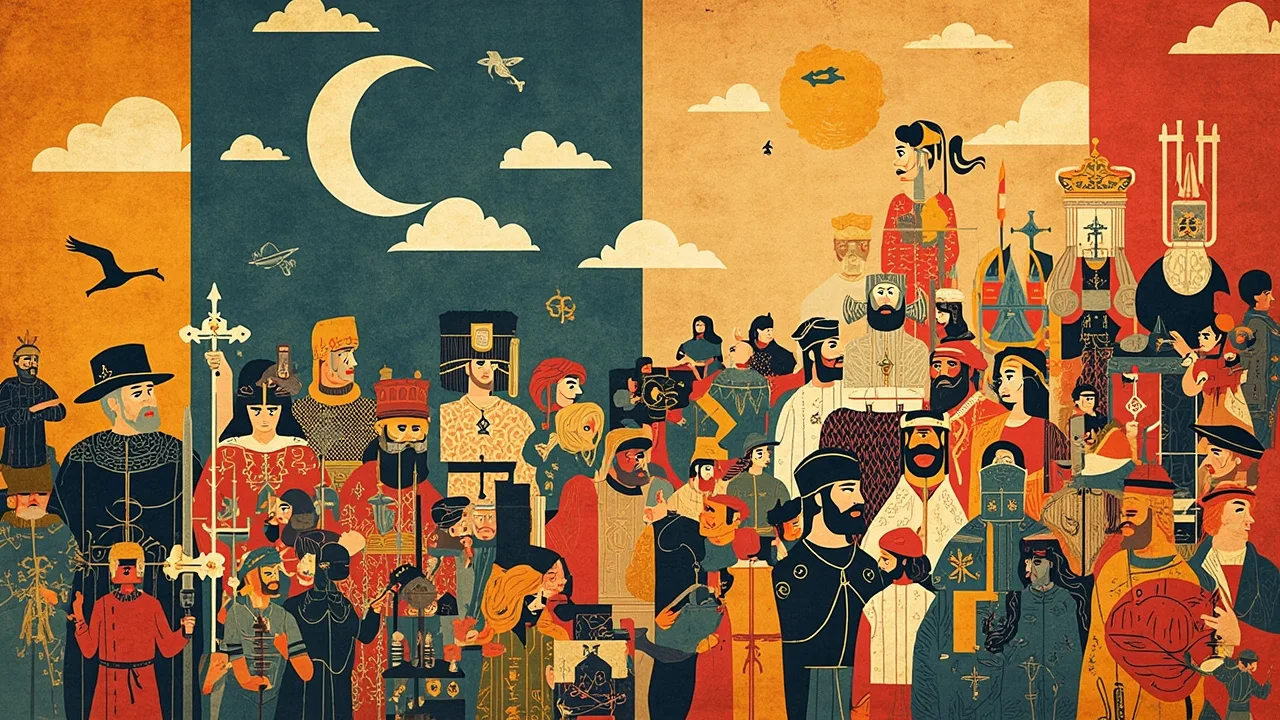
Play a The Middle Ages word search free online. We built the 12-word list around the terms and ideas of a school subject, then scattered it across a 15×15 grid — horizontal, vertical and diagonal. Find them all to clear the board.
Words to find: CASTLE, CHIVALRY, FEUDALISM, MONARCHY, KNIGHT, SERF, MANOR, VASSAL, NOBLE, JOUST, SIEGE, CATHEDRAL.
Found words stay highlighted, so the grid gets easier to read as you go and the final few tend to fall quickly.
The Middle Ages word list, defined
- CASTLE /ˈkɑː.səl/ (UK), /ˈkæs.əl/ (US) · noun
- A large fortified building or group of buildings with thick walls, battlements, and often a moat, historically serving as a stronghold for royalty or nobility; in chess, an informal term for the rook. Related: fortress, citadel, stronghold, keep.
- CHIVALRY /ˈʃɪvəlri/ · noun
- The medieval knightly code of conduct emphasizing bravery, honour, courtesy, and protection of the weak; by extension, courteous and gallant behaviour, especially by men toward women. Related: gallantry, courtesy, courtliness, knightliness.
- FEUDALISM /ˈfjuːdəlɪzəm/ · noun
- The dominant social and political system of medieval Europe, in which land was held from a superior lord in exchange for military service or labour, binding peasants (serfs) to the land and creating a hierarchy of mutual obligations between lords and vassals. Related: feudal system, manorialism, seignorialism.
- MONARCHY /ˈmɒnərki/ · noun
- A system of government in which a king or queen is the head of state, usually for life or until they abdicate. A country or state ruled by a monarch. Related: autocracy, dictatorship, oligarchy, tyranny.
- KNIGHT /naɪt/ · noun
- A medieval warrior of high social status, often serving as a vassal to a lord. A person who has been knighted, typically for their achievements or service. Related: warrior, chivalrous, noble, gentleman.
- SERF /sɜːrf/ · noun
- A person who is bound to work for a lord or a large estate in exchange for protection and the right to live on the land. A person of low social class, especially one who is bound to work for a lord or a large estate. Related: vassal, peasant, labourer, servant.
- MANOR /ˈmeɪnər/ · noun
- A large house, especially one that was the seat of a noble or royal family, or a large estate or farm, especially one that is owned and managed by a lord or lady. Related: estate, mansion, hall, chateau.
- VASSAL /væsəl/ · noun
- A person who holds land or a title under a lord or king, often in a position of loyalty and service. A person or thing that is subject to another's control or authority. Related: subject, liege, feudal, servant.
- NOBLE /ˈnoʊbəl/ · adjective
- Having or showing fine personal qualities or high moral principles; generous and gracious in one's behavior. Related: exalted, elevated, magnanimous, generous.
- JOUST /dʒoʊst/ · verb
- To engage in a medieval contest on horseback, in which two armored knights on horseback charge at each other with lances. To engage in a contest or competition, especially a mock battle. Related: tilt, charge, contest, duel.
- SIEGE /sɪdʒ/ · noun, verb
- A prolonged attack on a fortified place, or a state of being under attack. To surround or blockade a place, especially a fortified one, in order to force it to surrender. Related: attack, blockade, besiege, encircle.
- CATHEDRAL /kəˈθiːdrəl/ · noun
- The principal church of a diocese, containing the bishop's official throne (cathedra) and serving as the central church of a Christian diocese. Related: minster, basilica, duomo.
Play the The Middle Ages word search · Browse every topic · Today's daily challenge